
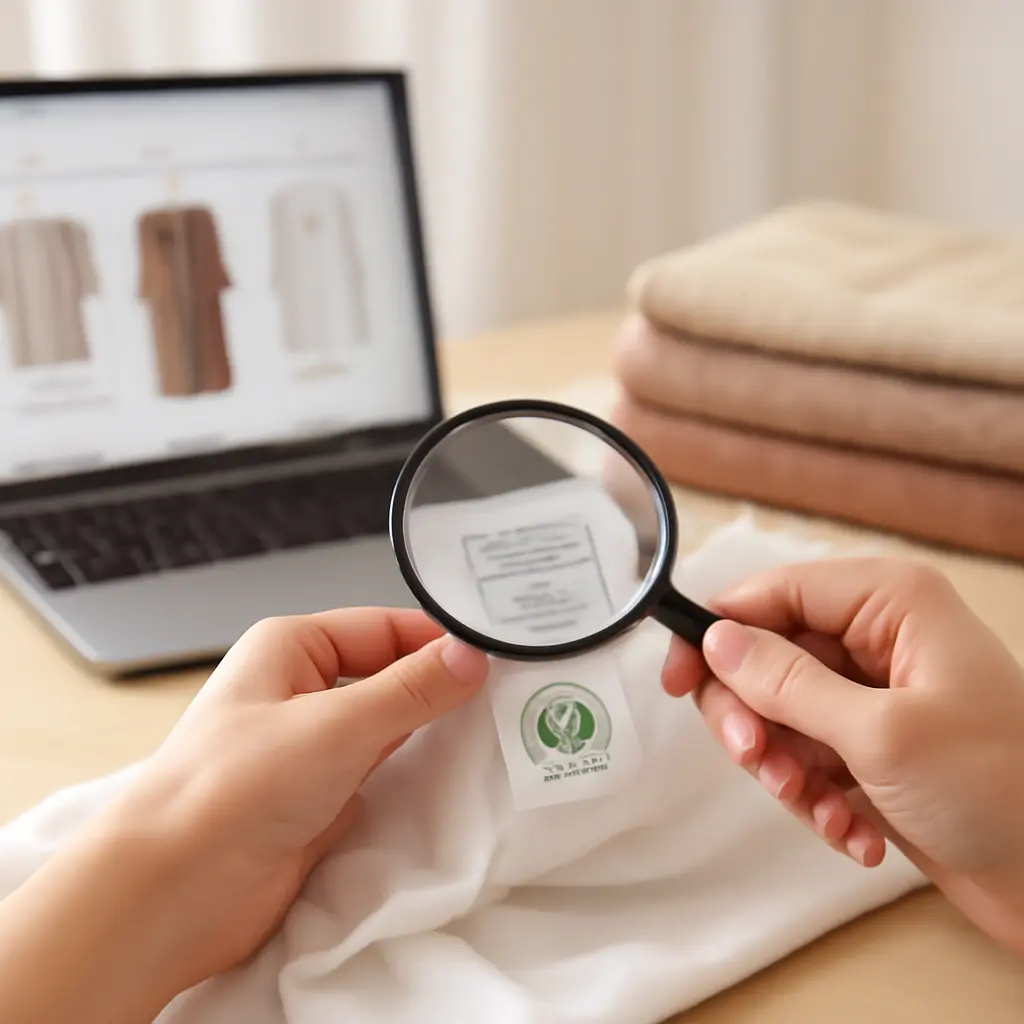
Why Buying Safe Clothing Online Still Feels Like a Gamble
\n\nEvery year, thousands of shoppers turn to online news forums about safe clothing purchases seeking answers to the same nagging question: how do you actually know if what you're buying is safe? The rise of fast fashion and cross-border e-commerce has made it easier than ever to fill your wardrobe — but it's also made it alarmingly difficult to verify what's actually in the fabrics touching your skin.
\n\nIf you've ever scrolled through a news forum about safe clothing purchases, you've probably seen horror stories: rashes from untested dyes, allergic reactions to chemical finishes, and garments that fail basic safety standards. The truth is, buying clothing online without a verification system is a lot like placing bets without reading casino review ratings first — you're essentially trusting luck over evidence. The good news? There are proven, practical methods to take control of your purchases and shop with genuine confidence.
\n\nWhat Makes Online Clothing Risky in the First Place
\n\nBefore diving into solutions, it helps to understand where the danger actually comes from. Most clothing — especially budget pieces sold on marketplace platforms — goes through a chemical-heavy manufacturing process. Fabric treatments, wrinkle-resistant coatings, flame retardants, and synthetic dye fixatives can all leave behind residues that are harmful to health over time.
\n\n \n\n
\n\nThe core problem with buying online is the information gap. In a physical store, you can touch fabrics, read labels in person, and even smell the garment for chemical odors. Online, you're relying entirely on product descriptions, which are often incomplete or misleading. This information gap mirrors a challenge seen in other review-dependent industries. Just as experienced gamblers never choose a platform without first consulting casino review ratings from trusted sources, smart clothing buyers need reliable signals before committing their money.
\n\nHere are the most common risks you face when buying clothing online:
\n\n- \n
- Azo dyes — banned in many countries but still found in cheap imports, these dyes can release carcinogenic amines \n
- Formaldehyde resins — used in wrinkle-free treatments, they can cause skin irritation and respiratory issues \n
- Heavy metals like lead, cadmium, and chromium used in pigments and tanning processes \n
- Per- and polyfluoroalkyl substances (PFAS) in water-resistant coatings \n
- Phthalates found in printed designs and plastic trims \n
The absence of transparent rating systems for clothing safety is what makes this so difficult. In the casino industry, players benefit from structured rating criteria — licensing verification, payout transparency, user experience scores — all compiled into clear casino review ratings that help them make informed choices. Clothing buyers deserve a similar framework, and the strategies below will help you build one.
\n\nHow Review Rating Methodology Applies to Clothing Verification
\n\nOne of the most effective ways to approach clothing safety is to borrow the methodology behind well-structured review systems. Think about how thorough casino review ratings work: analysts examine licensing credentials, test customer service responsiveness, verify payout percentages, and compile hundreds of user experiences into a coherent score. You can apply the exact same rigor to evaluating whether an online clothing seller is trustworthy.
\n\nThe Multi-Point Verification Framework
\n\nProfessional review sites in the gambling industry don't rely on a single data point — they cross-reference multiple signals to arrive at a rating. You should do the same when evaluating clothing safety. If you want a deeper overview, our breaks down every step of the verification process from label reading to fabric testing.
\n\nHere's a practical, step-by-step process you can follow before making any clothing purchase online:
\n\n- \n
- Check whether the seller displays any recognized safety certifications (OEKO-TEX, GOTS, REACH compliance) \n
- Search the product or brand on independent news forums dedicated to safe clothing purchases \n
- Look for third-party lab test results or transparency reports on the seller's website \n
- Read customer reviews specifically for mentions of skin reactions, chemical smells, or quality issues \n
- Verify the return policy — reputable sellers confident in their product safety always offer hassle-free returns \n
- Cross-reference the brand against consumer watchdog databases and recall lists \n
This ordered approach mirrors how top-tier review platforms build their casino review ratings: start with verifiable credentials, layer in user feedback, and then make a judgment based on the weight of evidence. The key principle is the same — never rely on a single source of information.
\n\nBuilding a Personal Trust Score for Sellers
\n\nJust as casino review ratings assign numerical scores to platforms based on multiple criteria, you can create a simple scoring system for clothing sellers. Rate each vendor on a scale of 1 to 5 across several dimensions, then calculate a composite trust score before buying.
\n\n\n\n\n\n\n\n\n\n\n\n\n\n\n\n\n\n\n\n\n\n\n\n\n\n\n\n\n\n\n\n\n\n\n\n\n\n\n\n\n\n| Trust Criteria | What to Check | Score Range |
|---|---|---|
| Safety Certifications | OEKO-TEX, GOTS, Bluesign displayed | 1–5 |
| Transparency | Factory info, supply chain details | 1–5 |
| Customer Feedback | Reviews mentioning safety or reactions | 1–5 |
| Return Policy | Easy returns, satisfaction guarantee | 1–5 |
| Third-Party Testing | Independent lab reports available | 1–5 |
| Regulatory Compliance | Meets REACH, CPSIA, or equivalent | 1–5 |
A seller scoring below 18 out of 30 should raise red flags. This scoring method works because it removes emotional decision-making from the process — exactly the principle behind reliable casino review ratings. When you quantify trust, you make better choices.
\n\nSpotting Harmful Chemicals — What to Look for and Where
\n\n \n\n
\n\nKnowing which chemicals to watch out for is half the battle. The other half is understanding where sellers hide — or omit — safety information. In much the same way that casino review ratings expose hidden terms in bonus offers that platforms would rather you didn't read, a thorough fabric safety check involves looking beyond the obvious.
\n\nFormaldehyde is one of the most prevalent chemical hazards in clothing. It's commonly used in wrinkle-free and permanent press finishes. While some countries cap formaldehyde levels at 75 parts per million for items with direct skin contact, many imported garments exceed this threshold. A simple test: if a new garment has a harsh, chemical smell straight out of the package, formaldehyde treatment is likely.
\n\nAnother major concern is azo dye contamination. Roughly 60–70% of all synthetic dyes used in textiles are azo-based. While most are safe, around 5% can break down into aromatic amines that are classified as carcinogenic. The European Union's REACH regulation bans these, but enforcement varies widely for imported goods. You can check a seller's REACH compliance status by searching the European Chemicals Agency public database.
\n\nHeavy metals present yet another hidden danger. Chromium VI, used in leather tanning, and lead, occasionally found in bright-colored pigments, can cause serious dermatological and neurological damage with prolonged exposure. For parents buying children's clothing, this is a critical concern — always look for CPSIA compliance in the US or equivalent standards in your region.
\n\nThe Smell Test and Other Quick Checks
\n\nWhile laboratory testing provides the most definitive answers, there are several quick checks you can perform at home when your order arrives. These are the clothing safety equivalents of the basic due diligence anyone does before trusting casino review ratings for real money decisions — quick sanity checks that filter out the worst options.
\n\n- \n
- The smell test: a strong chemical or fishy odor indicates high formaldehyde or chemical finish residue \n
- The water test: soak a small section in warm water for 30 minutes — if the water changes color significantly, dye fixation is poor and chemical leaching is likely \n
- The label check: look for specific safety certifications, not just generic \"safe\" or \"eco-friendly\" claims \n
- The touch test: if fabric feels unnaturally stiff or has a waxy coating, it may contain heavy chemical treatments \n
- Check country of manufacture against known regulatory environments \n
These quick home assessments won't replace professional testing, but they serve as an excellent first filter. Think of them as the preliminary screening stage — similar to how casino review ratings start by verifying a platform's license before diving into deeper analysis.
\n\nLeveraging Community Knowledge and Forums
\n\nOne of the most underutilized resources for clothing safety verification is community-driven feedback. News forums dedicated to safe clothing purchases are treasure troves of real-world experience. Members share test results, call out specific brands and products, and provide the kind of granular feedback you'll never find in marketing copy. Learning to through community-backed methods gives you a significant advantage over relying on seller claims alone.
\n\n\n\nThe parallel to casino review ratings is striking here too. The most trusted gambling review sites combine expert analysis with aggregated player feedback, creating a two-layer verification system that's far more reliable than either source alone. For clothing safety, the equivalent is combining certification checks with community reports from forums and independent review platforms.
\n\nWhen participating in or browsing these forums, look for posts that include:
\n\n- \n
- Specific product names and batch numbers \n
- Photographs of labels, certifications, and test results \n
- Descriptions of physical reactions or quality concerns \n
- Comparisons between similar products from different sellers \n
- Links to regulatory databases or independent testing services \n
This community-driven verification approach is growing rapidly, and it's making the clothing market more transparent in much the same way that independent casino review ratings have forced gambling platforms to improve their standards over the past decade. When consumers share information openly, the entire marketplace benefits.
\n\nMaking It All Work — Your Safer Shopping Action Plan
\n\nBringing everything together, the path to safer online clothing purchases relies on a structured, evidence-based approach rather than blind trust. Just as the most reliable casino review ratings are built on transparent methodology, repeatable testing, and aggregated data, your personal clothing safety strategy should follow the same principles.
\n\nStart by identifying two or three trusted certification standards — OEKO-TEX Standard 100, GOTS, and Bluesign are excellent starting points. Make these your minimum baseline. Then layer in community feedback from forums, apply your personal trust scoring framework to each seller, and use the quick home tests as a final safety net when products arrive.
\n\nRemember that no single check is foolproof. The strength of this approach comes from combining multiple verification methods, exactly as robust casino review ratings combine licensing checks, user feedback, payout analysis, and expert evaluation into a single comprehensive score. Each layer of verification you add reduces your risk exponentially.
\n\nThe online clothing market is evolving, and consumers who take safety seriously are driving positive change. By applying the same critical thinking and rating-based evaluation that smart consumers use in every other review-dependent industry — from electronics to dining to casino review ratings — you can build a wardrobe you trust, from sellers you've verified, with fabrics you know are safe. That's not just smart shopping — it's the new standard.
\n"}}],"uuid":"6211cef1-9e7e-4622-959a-6cd2684706db","errors":[]}

To leave a comment, please sign up or log in
Log in / Sign up