
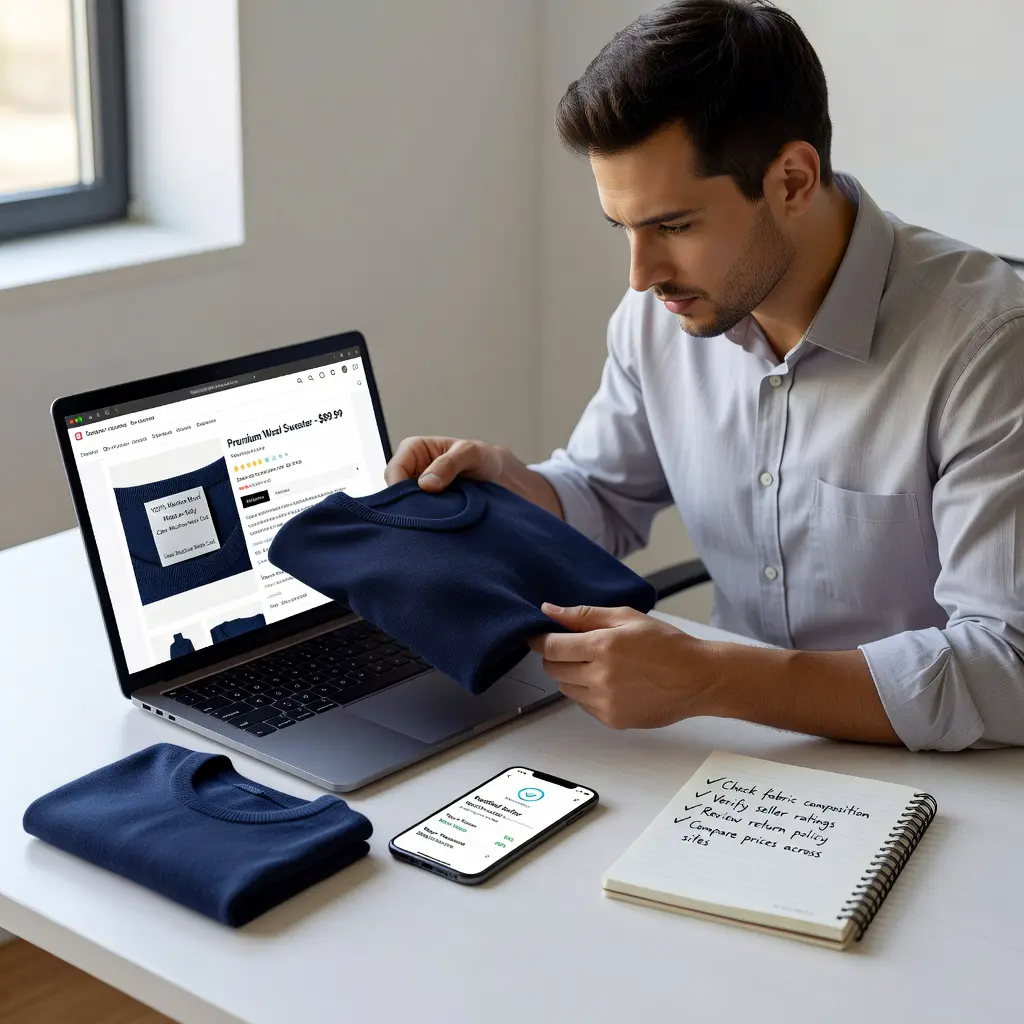
Why Safe Clothing Shopping Online Demands Extra Vigilance

Every week, participants on every major news forum about safe clothing purchases share cautionary stories — counterfeit fabrics, unverified overseas sellers, and chemical treatments that were never disclosed on the product label. The volume of these reports has grown in step with online retail itself, and the patterns they reveal are remarkably consistent: most unsafe purchases could have been avoided with a structured verification process before checkout. This guide gives you that process, step by step, so that your next online clothing purchase is grounded in evidence rather than assumption.
The conversations happening daily on the news forum about safe clothing purchases community make one thing absolutely clear — the risks are not limited to obvious scam sites. Reputable-looking storefronts, polished product photography, and pages full of five-star reviews can all mask sellers who cut corners on materials, misrepresent certifications, or disappear when a return request arrives. Understanding how to look beneath the surface is the single most important skill any online clothing shopper can develop, and it requires nothing more than a methodical approach and a few reliable tools.
How to Verify an Online Clothing Seller Before You Buy
The foundation of every safe online clothing purchase is a thorough assessment of the seller themselves. Seller verification is not optional — it is the first and most consequential step in the process. A legitimate retailer will have a transparent, verifiable digital footprint that you can examine before you commit a single cent, and the absence of that footprint is itself a meaningful data point.
Examining Track Records, Reviews, and Business Credentials
Begin your research by searching the seller's business name alongside terms such as "review," "complaint," or "refund problem" on major search engines and dedicated consumer review platforms. What you are looking for is not the presence of any negative feedback — every retailer of scale accumulates some — but rather patterns of recurring complaints about the same issues: fabric not matching descriptions, packages that never arrive, or return requests that go unanswered. Platforms like Trustpilot, Google Business reviews, and forums dedicated to clothing and textile shopping provide aggregated feedback that is far more reliable than any testimonials published on the seller's own website. You can also verify clothing safety through independent comparison resources that focus specifically on material quality and seller reliability.
Scrutinizing the Website for Legitimate Trust Signals
After reviewing external feedback, turn your attention to the seller's website itself. A legitimate online clothing retailer will display several verifiable trust indicators prominently and consistently. The most fundamental of these is a secure HTTPS connection, visible as a padlock icon in your browser's address bar — any site still operating over unencrypted HTTP should be treated as suspect for financial transactions. Beyond that baseline, look for a verifiable physical address, a direct telephone number or live chat option, clearly written Terms and Conditions, and a privacy policy that specifically explains how customer data is stored and shared. Third-party security badges from recognized organizations add another layer of credibility, though it is worth checking that such badges link back to genuine verification pages rather than being simple static images.
Understanding Return and Refund Policies Before Committing
The return and refund policy is one of the most revealing documents on any online clothing seller's website, and it is consistently the most overlooked. A fair, transparent return policy will specify a minimum return window of at least 30 days from delivery, cover exchanges for sizing discrepancies, and commit to refund processing within a defined timeframe. Warning signs include vague language that excludes most products from return eligibility, hidden restocking fees buried in fine print, or requirements to return items to an international address at your own expense — the last being a deliberate barrier designed to make returns financially impractical. Always save or screenshot the return policy at the time of purchase, since some sellers quietly update their terms after transactions are completed.
- Search the seller's name alongside "complaint," "scam," or "review" on at least two independent platforms before purchasing.
- Confirm the website uses HTTPS encryption and verify the SSL certificate is current and legitimate.
- Locate a physical business address, phone number, or live chat — not just a generic contact form.
- Read the complete return and refund policy, noting every exclusion, fee, and processing timeframe.
- Cross-check prices against established competitors — offers priced 50% or more below market rate warrant serious scrutiny.
- Verify whether the seller is listed on established marketplaces with buyer protection or holds demonstrable business registration.
- Check the seller's social media presence for authentic customer engagement history rather than sparsely populated or recently created accounts.
Decoding Clothing Safety Labels and Certifications
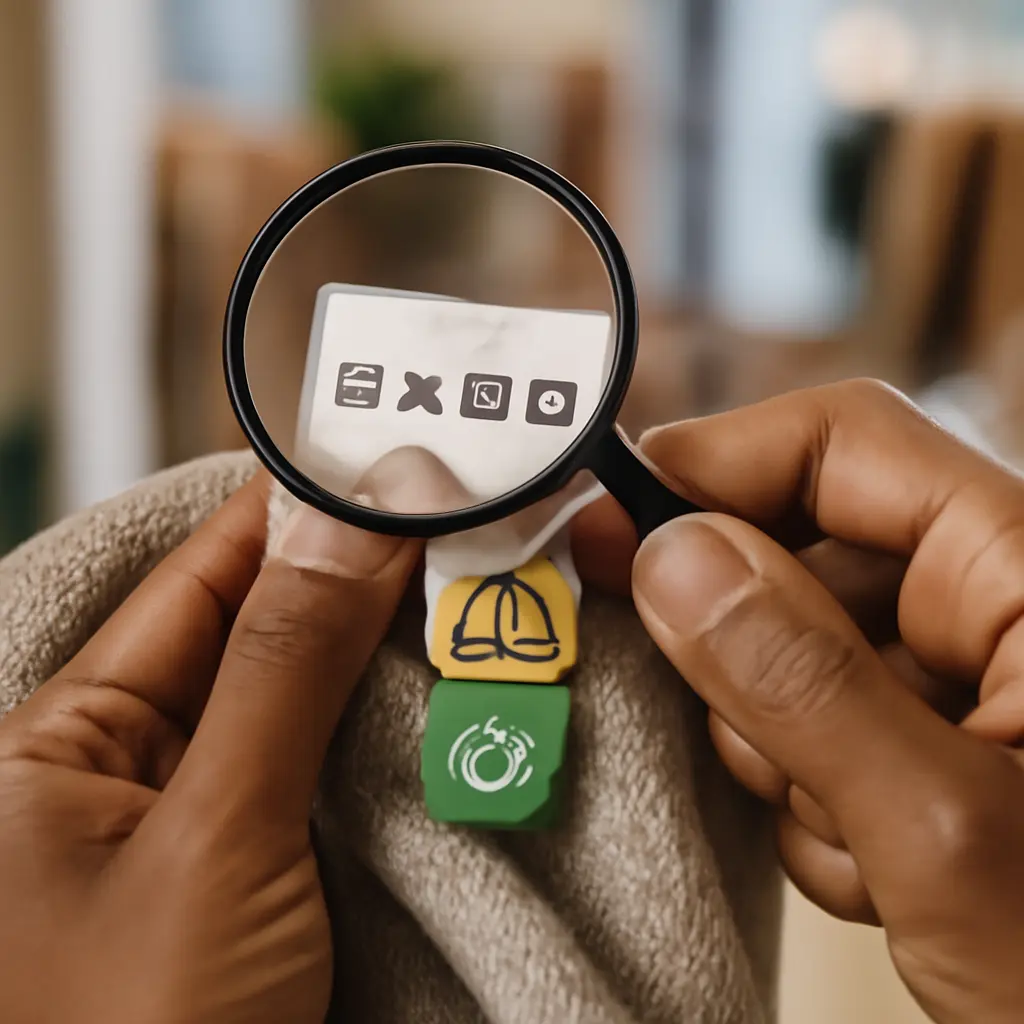
Once you have confirmed a seller is legitimate, the next critical step is evaluating whether the clothing itself meets safety standards. Product labels and third-party certifications carry detailed information that most consumers never examine, yet this information is often the clearest window into a garment's actual quality, chemical safety, and production conditions. Learning to read and verify these signals transforms you from a passive buyer into a genuinely informed one.
What International Clothing Certifications Actually Mean
The global textile industry operates under several recognized certification frameworks, each designed to test for specific safety and quality parameters. Knowing which certifications carry genuine weight — and how to verify them independently — is especially important when shopping for children's clothing, sleepwear, and garments worn close to the skin for extended periods. Understanding certified labels gives you the ability to distinguish between substantiated safety claims and marketing language that simply uses the word "safe" without any supporting evidence.
| Certification | Primary Focus | Issuing Organization | Verification Method |
|---|---|---|---|
| OEKO-TEX Standard 100 | Harmful substances, pH levels, colorfastness | OEKO-TEX Association (International) | Label verification database at oeko-tex.com |
| GOTS (Global Organic Textile Standard) | Organic fiber content, processing chemicals, fair labor | Global Standard gGmbH | Public supplier database at global-standard.org |
| Bluesign | Chemical safety, resource efficiency, worker safety | bluesign technologies (Switzerland) | Partner brand list at bluesign.com |
| REACH Compliant | Restriction of hazardous chemicals in EU market | European Chemicals Agency (ECHA) | Substance database at echa.europa.eu |
| Fair Trade Certified | Labor standards, community impact, supply chain | Fairtrade International / Fair Trade USA | Certified product directory at fairtrade.net |
| Cradle to Cradle | Material health, recyclability, full lifecycle | Cradle to Cradle Products Innovation Institute | Certified product registry at c2ccertified.org |
The most important rule when evaluating any certification claim is simple: never accept a logo at face value. Go directly to the certifying body's official website and search for the seller or manufacturer by name in their public registry. Fraudulent sellers frequently display OEKO-TEX or GOTS logos — sometimes copied directly from legitimate brands — without having ever submitted products for testing. If a label number or brand name does not appear in the official database, the certification is false, and the product's actual composition may be entirely unknown. For deeper background on navigating these verification steps, podrobnosti najdete tady.
Reading Fabric Composition Labels Critically
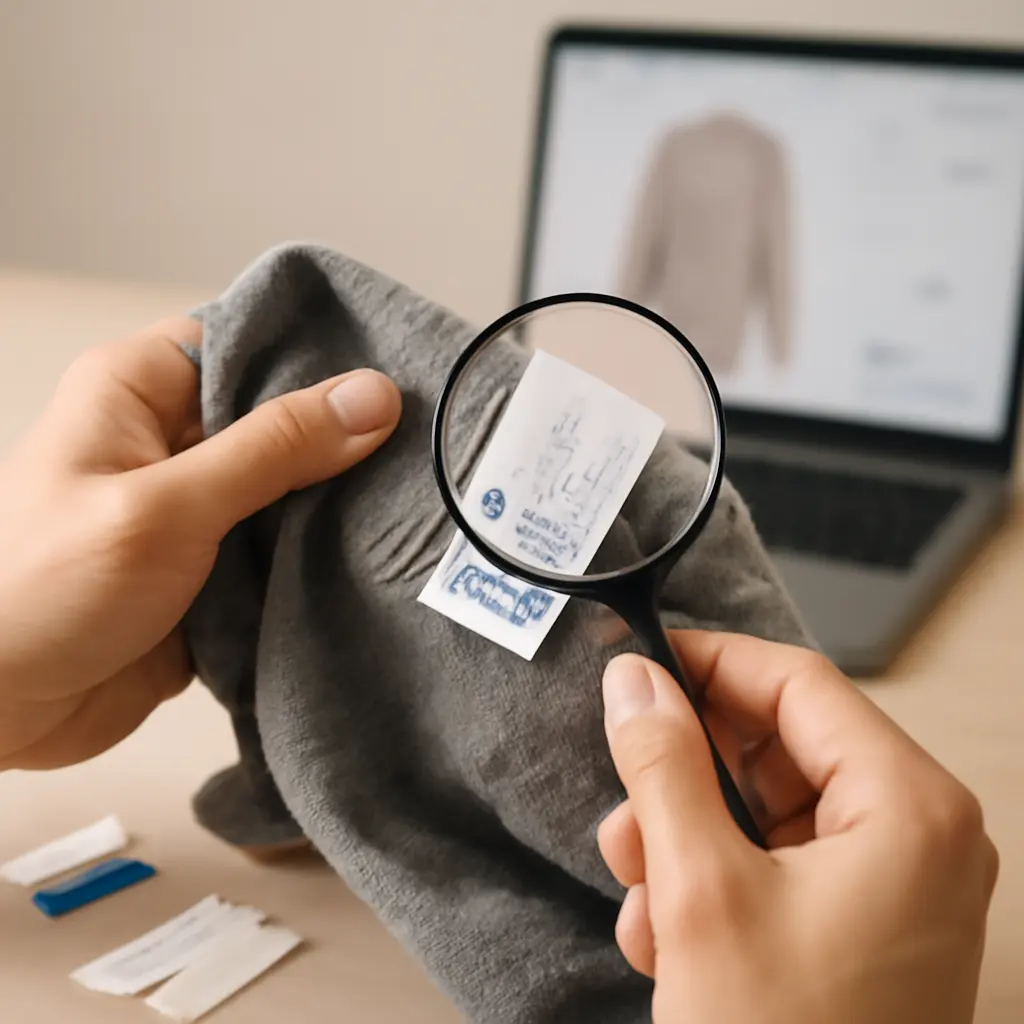
Even in the absence of third-party certifications, the mandatory fabric composition label on any garment provides fundamental safety and quality information. Natural fibers such as organic cotton, linen, hemp, and merino wool are generally lower-risk for sensitive skin, while synthetic materials like polyester, acrylic, and nylon may carry undisclosed chemical finishes applied during manufacturing. The country of origin listing is relevant not as a quality judgment but as an indicator of which chemical regulatory framework governed production — EU-manufactured garments, for example, must comply with REACH restrictions on hazardous substances, while imports from regions with less stringent oversight may not meet the same standards.
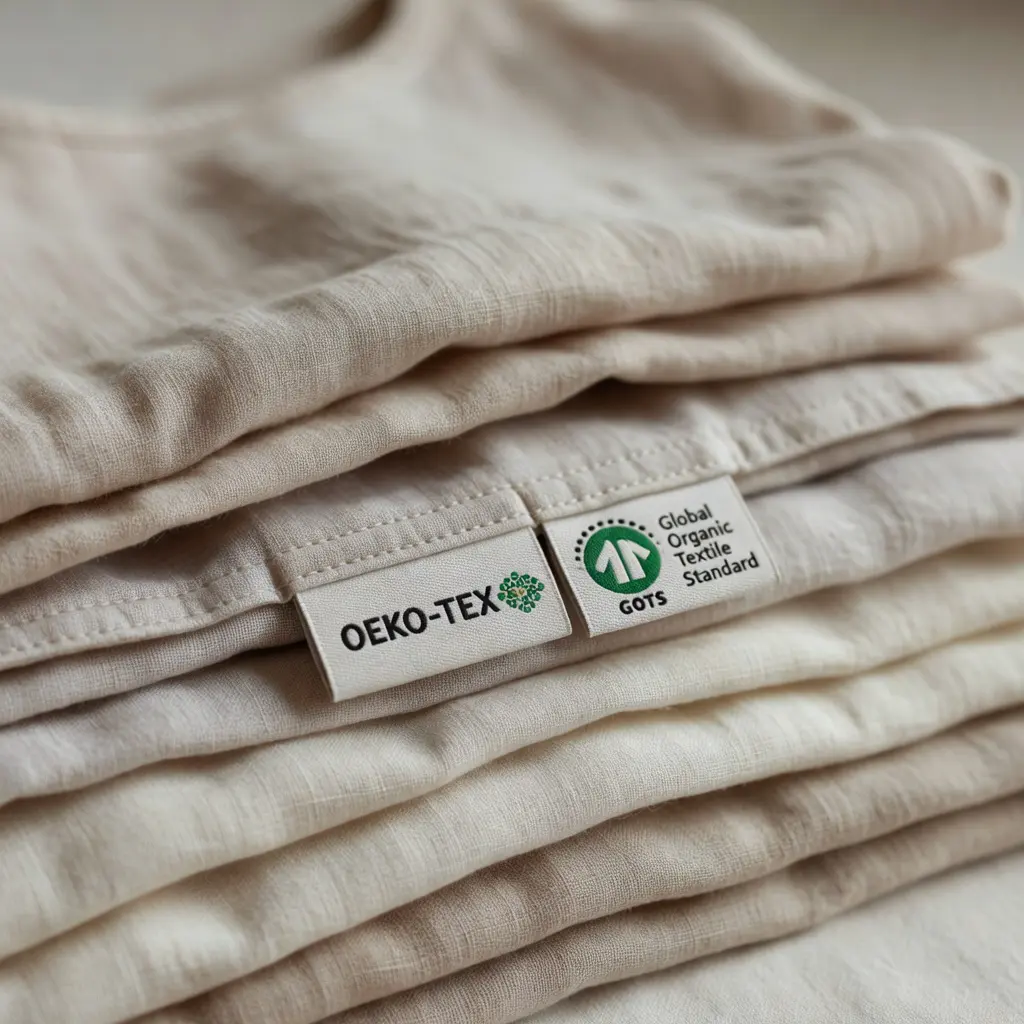
Be aware that fabric composition claims are not immune to fraud. Some sellers list higher percentages of premium natural fibers than garments actually contain in order to justify higher prices or create a false impression of safety. When purchasing in significant quantities, requesting fabric samples for independent testing is a strategy used by experienced buyers. For individual consumer purchases, the simplest practical check is to compare the labeled composition against the garment's actual texture, weight, and drape — a garment labeled as 100% linen, for example, should feel and behave distinctly differently from one that is actually a polyester-linen blend.
Red Flags That Signal a Risky Online Clothing Purchase
Experienced online shoppers develop a calibrated sensitivity to the warning signs that indicate a clothing purchase is likely to disappoint — or worse, pose a genuine safety risk. Most problematic sellers share a recognizable cluster of characteristics that, once identified, stand out clearly from the behavior of legitimate retailers. Learning to recognize these patterns is as valuable as knowing what good looks like.
- Prices dramatically below market rate — typically 50% to 80% less than comparable items from established brands — indicating undisclosed materials, counterfeiting, or a bait-and-switch scheme.
- Product images that are clearly stock photography or appear to have been copied from other retailers rather than showing the actual item being sold.
- Descriptions relying on unsubstantiated safety language — phrases like "completely safe," "chemical-free," or "hypoallergenic" with no certifications or test results to support them.
- No usable size chart, or sizing guidance that is vague and inconsistent across different products in the same listing.
- Contact options limited to a single email address with no phone number, physical address, or live chat support available.
- Review sections where all feedback appears within a narrow date range and uses remarkably similar phrasing — a classic indicator of fabricated reviews.
- Return policies that require buyers to cover international return shipping costs, making refunds economically impractical in relation to the item's price.
- Aggressive scarcity and urgency tactics: countdown timers, artificial stock warnings, and "flash sale" prompts designed to pressure quick decisions before proper research.
- Payment methods restricted to wire transfers, prepaid gift cards, or cryptocurrency — options that provide no buyer protection in the event of fraud or non-delivery.
- Social media accounts that are brand new, sparsely populated with generic content, and show no organic engagement from real customers.
If two or more of these warning signs appear together on any listing or seller profile, the risk level of proceeding rises substantially. Consumer protection experts consistently advise treating any cluster of red flags as a stop signal, not an invitation for further deliberation. The online clothing market is vast, and equivalent products are nearly always available from a more transparent source — no discount justifies the loss of money, personal data, or exposure to unsafe materials.
Protecting Your Payment Information and Personal Data
Even when a clothing seller appears entirely legitimate, how you pay and how much personal data you share during checkout has significant implications for your financial and digital security. Payment protection mechanisms are your final line of defense when a transaction goes wrong, and the payment method you choose determines whether you have meaningful recourse. The same due diligence that experienced users apply to any online platform — whether evaluating an e-commerce site, a service provider, or a resource like cZKasino — applies directly and without exception to online clothing purchases.
Choosing the Right Payment Method Every Time
Credit cards and established digital wallets such as PayPal offer the strongest consumer protections available for online purchases. Credit card chargebacks allow you to formally dispute a charge with your bank when a product fails to arrive, arrives significantly different from what was described, or when a seller refuses to honor their stated return policy. PayPal Buyer Protection operates on a similar framework and is widely accepted by legitimate international clothing retailers. Wire transfers, prepaid gift cards, and cryptocurrency payments offer virtually zero recourse in the event of fraud — if a transaction using these methods goes wrong, recovery is rarely possible. Treat any seller that refuses all other payment methods as a high-risk proposition.
Minimizing Your Personal Data Exposure at Checkout
A standard clothing purchase requires only your shipping address, an email address for order confirmation, and payment details. Any request for information beyond these essentials — particularly requests for date of birth, national ID numbers, or copies of government-issued documents — should be treated as a serious overstep. Many security-conscious online shoppers create a dedicated email address specifically for retail activity, limiting the impact of any data breach to that isolated account rather than their primary correspondence. Always review the seller's privacy policy before completing checkout to verify that your data is not being sold to third-party marketers or stored in ways you have not agreed to.
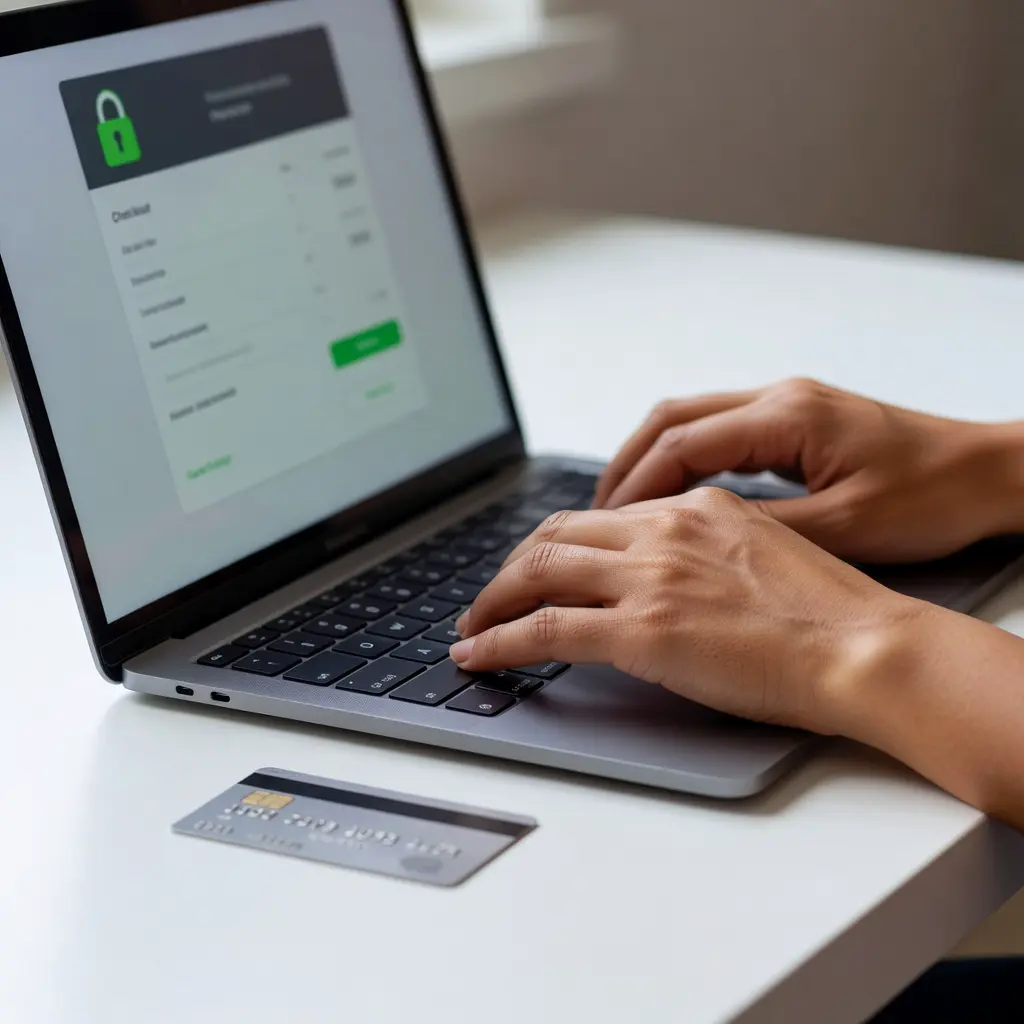
Using a virtual credit card — a temporary card number tied to your real account but isolated from it in the event of compromise — is one of the most effective tools available to online shoppers concerned about data security. Many banks and card issuers now offer virtual card generation as a free feature through their mobile apps. Combined with a password manager that generates unique, strong passwords for every retail account you create, this approach substantially reduces your exposure to credential theft and unauthorized account access. These are not specialist techniques requiring technical expertise — they are straightforward tools that any online shopper can implement immediately.
Building and Using a Personal Safe Shopping Checklist
The most reliable way to apply everything in this guide consistently — even under the pressure of a time-limited deal or an appealing product — is to formalize your process as a written checklist you run through before every purchase. A structured verification routine removes the temptation to skip steps when something looks compelling, and it ensures that urgency tactics cannot bypass your better judgment. Over time, this routine becomes automatic and requires only a few minutes, but those minutes protect you from the vast majority of unsafe online clothing purchases.
The Pre-Purchase Verification Routine
Your checklist should address three distinct dimensions of any purchase: who you are buying from, what you are buying, and how the transaction will be protected. Each dimension has specific checkpoints, and moving through all three before finalizing your cart gives you a comprehensive picture of the risk involved in any particular purchase decision.
- Search the seller's domain name and business name on two or more independent consumer review platforms and look for complaint patterns.
- Verify HTTPS encryption is active and that third-party security badges link to genuine verification pages.
- Confirm a physical address, direct phone number, or live chat support is available and responsive.
- Read the complete product description and flag any unsubstantiated safety claims for investigation.
- Check stated fabric composition and country of origin against your knowledge of relevant chemical regulations.
- Look up any referenced certifications in the issuing organization's official public registry using the seller or manufacturer's name.
- Read the full return and refund policy, noting every exclusion and fee before proceeding to payment.
- Confirm a buyer-protected payment method is available and select it intentionally at checkout.
- Screenshot or save the product description, price, and stated policies as a record at the moment of purchase.
If more than two concerns surface while running through this list, the right response is almost always to step away from that purchase and search for an equivalent product from a more transparent seller. The perceived urgency of a deal rarely survives genuine scrutiny — manufactured scarcity is one of the oldest pressure tactics in retail, and recognizing it for what it is puts the decision firmly back in your hands. No garment is unique enough to justify purchasing from a seller who cannot pass a basic verification check.
What to Do After Your Purchase Arrives
Verification does not end at checkout. When a clothing order arrives, inspect it immediately and methodically. Confirm that fabric composition labels match the listing description, check for any unusual chemical odors (a sign of heavy processing with undisclosed finishing agents), and compare the actual garment carefully against the product photographs. If the item differs materially from what was described — in fabric type, construction quality, sizing, or any other substantive way — initiate a return or payment dispute immediately. Both credit card chargeback processes and platform-based buyer protection systems have strict filing windows, typically ranging from 30 to 180 days depending on the provider, and waiting beyond those deadlines significantly reduces your chances of a successful resolution.
Conclusion: A Framework That Works Every Time You Shop
Buying clothing online safely is not a matter of luck or instinct — it is the outcome of a consistent, structured approach applied before every purchase. The five pillars covered in this guide — verifying seller legitimacy through independent research and website analysis, decoding certification labels using official registries, recognizing the red flags that characterize risky sellers, protecting payment and personal data through deliberate method selection, and using a written checklist to hold the process together — work as an integrated system. Each element reinforces the others, and the combination is far more powerful than any single precaution applied in isolation.
The time investment required to work through this process is modest relative to what it protects. A few minutes of research before each purchase significantly reduces your exposure to counterfeit goods, chemically unsafe fabrics, fraudulent sellers, and financial disputes. As the online clothing marketplace continues to grow in scale and complexity, the buyers who shop with the most confidence are consistently those who shop with the most information. Knowledge is the most durable protection available to any consumer — and unlike any single purchase decision, it compounds in value with every transaction you make.
Comments
You recommend a minimum 30-day return window, but some small sustainable brands only offer 14 days—should I always avoid them or are there reasonable exceptions?
I followed the tip to look up OEKO‑TEX numbers and found one that didn't exist — returned the hoodie before it shipped. That saved me from a fake label and a headache with returns.
I never realized how often fake OEKO-TEX or GOTS labels show up—definitely going to check the official registries before buying anything from now on.
I never realized how often “safe” labels can be faked—checking the certifying body directly seems like such a simple step that most people probably skip.
The tip about checking OEKO-TEX or GOTS in the official registry is huge—I've definitely seen stores slap those logos on product pages with zero label numbers. Has anyone actually caught a fake this way?
When you say to verify OEKO-TEX or GOTS in the official registry, do you search by brand name or is there a code on the tag that’s more reliable? I’ve seen a lot of listings with the logo but no number.
Didn't realize you could actually look up OEKO-TEX certifications in their database to check if a seller is legit. That's genuinely useful since I've seen that logo slapped on listings that felt off.
The tip about screenshotting the return policy at the time of purchase is something I never thought to do — I got burned last year when a seller quietly changed their terms after I placed an order.
The tip about screenshotting the return policy at the time of purchase is something I never thought to do — found out the hard way when a seller quietly changed their terms after I requested a refund.
Checking return policies before buying used to feel like overkill to me, but I got burned by a seller whose policy changed between my order and the delivery date — now I screenshot everything at checkout without fail.